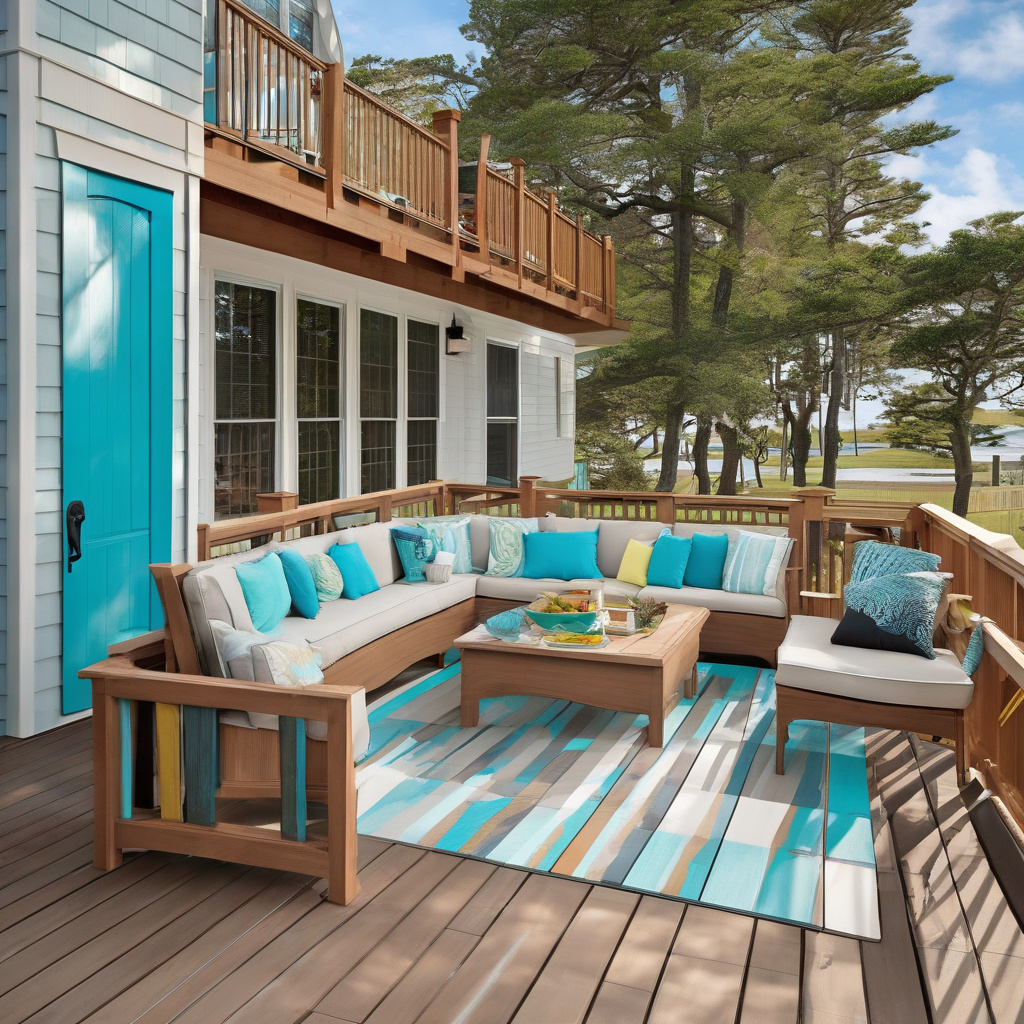
Coastal Deck Remodeling
A coastal Los Angeles deck remodel should prioritize corrosion-resistant connectors, UV-stable surfaces, secure furniture layouts, controlled drainage, and finishes that tolerate salt air without creating excessive maintenance.
The best design is not simply the one that looks most beach-inspired. Deck boards, fasteners, railings, shade structures, lighting, and furniture all need to suit the property’s sun exposure, wind patterns, elevation, and distance from marine air.
Coastal priorities: Inspect framing and metal connections before replacing visible deck boards. Choose materials as complete systems, including compatible fasteners, clips, sealants, and finishes. Plan open views without exposing lightweight furniture, screens, or shade elements to uncontrolled wind loads.
What Makes a Coastal Deck Remodel Different?
Decks near the ocean face a combination of salt-laden air, strong sunlight, wind-driven moisture, and repeated temperature changes. These conditions do not affect every component equally. Metal connectors can corrode, wood coatings can weather unevenly, some composite colors can become hot in direct sun, and exposed furnishings can shift or deteriorate faster than expected.
A remodel should therefore begin below the finished surface. Framing, ledger connections, joists, posts, rail attachments, stair components, and fasteners should be inspected before new boards conceal them. Replacing only the decking may improve appearance while leaving corrosion, moisture damage, or unstable connections unresolved.
For projects that involve structural repairs, new railings, rebuilt stairs, or major layout changes, coastal deck remodeling services can coordinate the visible design with the concealed construction details that determine long-term performance.
Marine exposure
Salt deposits and moisture can accelerate deterioration of incompatible fasteners, brackets, railing parts, lighting, and furniture hardware.
Solar exposure
Direct sun can increase surface temperature, fade colors, dry wood coatings, and create glare on pale or glossy materials.
Wind exposure
Open coastal layouts need secure furniture, properly designed screens, and shade structures that do not behave like uncontrolled sails.
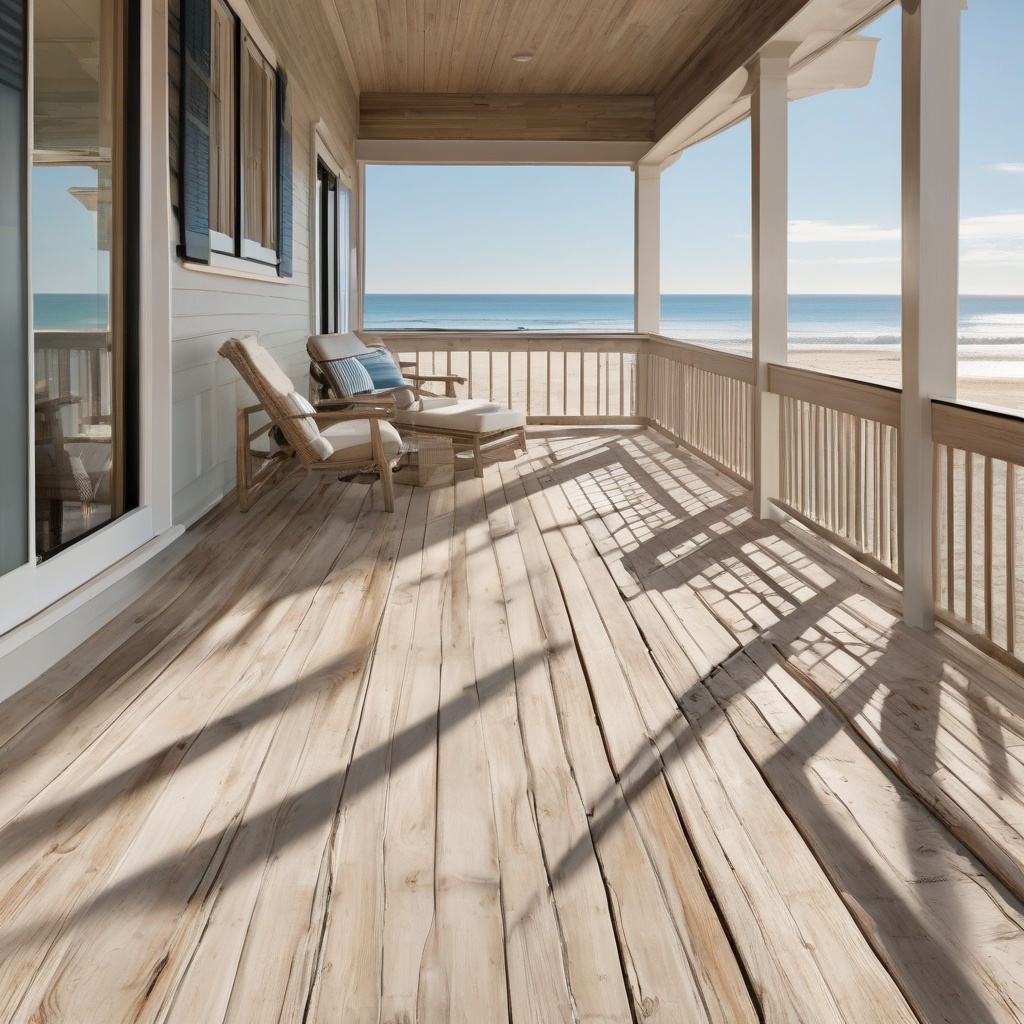
Choose Decking Materials for Heat, Fading, and Maintenance
Natural wood offers warmth and can suit both traditional and modern coastal homes, but it needs a realistic maintenance plan. Species, board quality, ventilation, finish type, sun exposure, and proximity to moisture all affect how evenly it weathers. A beautiful wood deck can become demanding when owners do not want regular cleaning and refinishing.
Composite and PVC decking reduce some maintenance tasks, but products differ in surface texture, heat retention, fading resistance, expansion behavior, fastening requirements, and permitted cleaning methods. The board, clip, screw, trim, and framing details should be treated as one manufacturer-controlled system rather than mixed casually.
Light colors may feel less visually heavy and can help create a coastal look, but they can show dirt, rust runoff, leaf stains, and shadows. Darker colors may hide some marks while absorbing more solar heat. Test full-size samples on the actual deck during the warmest and brightest part of the day.
Wood may suit the project
The owner values natural variation, accepts periodic finish maintenance, and can keep boards ventilated, clean, and protected from trapped moisture.
Composite may be more practical
The priority is lower routine refinishing, consistent color, and a manufacturer-defined system suitable for the deck’s exposure and framing.
Practical note: A durable deck board can still perform poorly when installed with incompatible fasteners, inadequate gaps, blocked ventilation, or a railing system unsuited to coastal exposure.
Compare broader decking materials for Southern California before selecting by appearance alone. The best material is the one whose installation, cleaning, repair, heat, and maintenance requirements match the property and household.
Specify Hardware and Railings for Salt-Air Conditions
Fasteners, joist hangers, post bases, railing brackets, cable fittings, screws, and decorative metal parts should be selected for compatibility with the surrounding materials and the expected exposure. Mixing dissimilar metals can contribute to corrosion, particularly where moisture and salt deposits remain.
Do not assume that a generic exterior screw is suitable for every coastal deck. Structural connectors and proprietary decking systems may require specific fasteners. Substituting a different screw for convenience can affect corrosion resistance, holding capacity, appearance, or manufacturer coverage.
Railings deserve special attention because they are both safety components and highly exposed architectural features. Glass can preserve views but requires regular cleaning and must use an approved system. Cable rails create a lighter appearance but depend on properly designed posts, hardware, spacing, and tension. Wood rails may integrate naturally with the deck but expose additional joints and end grain to weather.
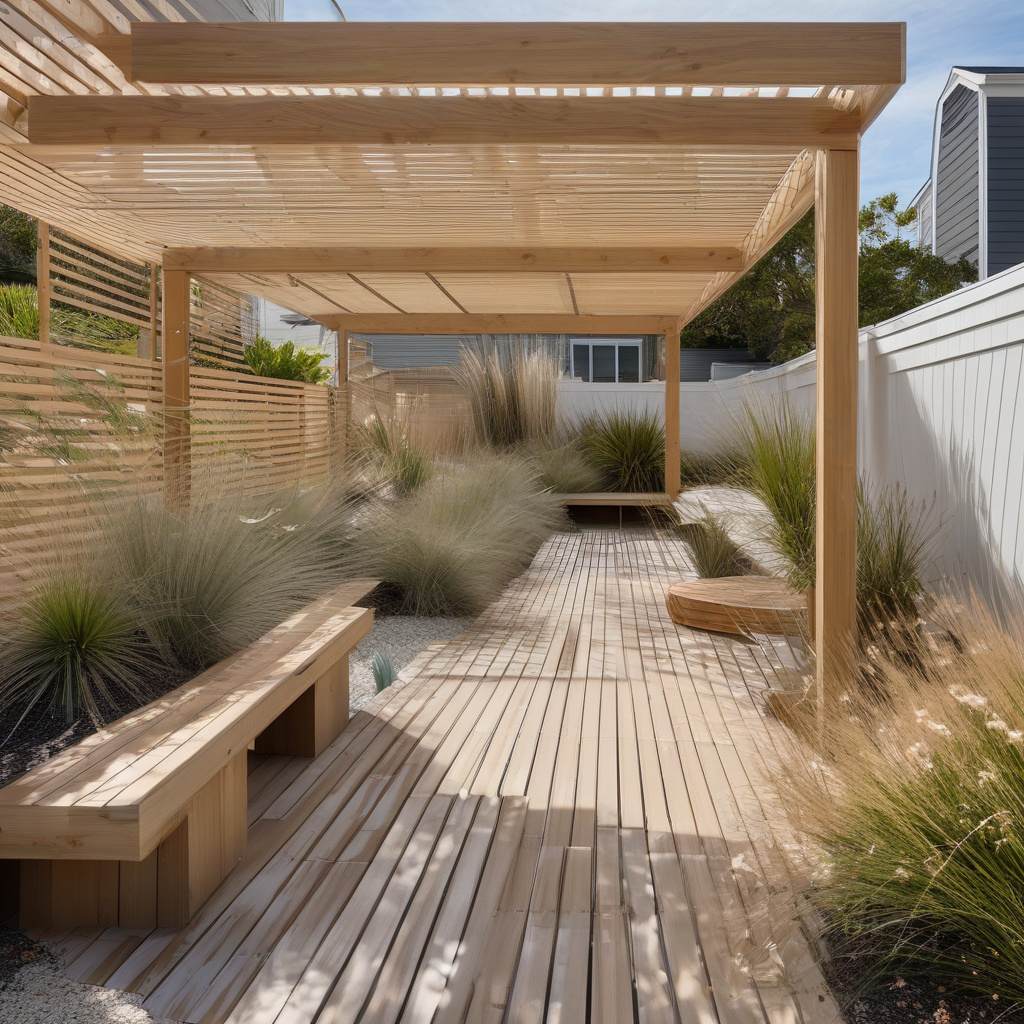
Compare Coastal Deck Material Strategies
A coastal deck remodel often involves trade-offs rather than one universal material winner. The visible surface, supporting frame, fasteners, railing, shade, and furniture all have separate exposure and maintenance requirements.
| Deck strategy | Best fit | Main trade-off |
|---|---|---|
| Natural wood decking | Homes prioritizing authentic grain and refinishing flexibility | Requires ongoing inspection, cleaning, and finish maintenance |
| Capped composite decking | Owners seeking consistent appearance and reduced refinishing | Heat, expansion, fastening, and cleaning vary by product |
| PVC decking | High-moisture locations using a compatible full system | Appearance, movement, heat, and structural feel require evaluation |
| Glass railing | View-focused decks with appropriate engineering and maintenance | Salt film, fingerprints, wind loads, and cleaning access |
| Cable railing | Modern open layouts with properly designed framing | Hardware exposure, tension, and post loading must be controlled |
| Protected wood accents | Adding warmth without using wood across the full deck surface | Selective areas still need compatible coatings and detailing |
For environmentally focused projects, review eco-friendly deck material ideas carefully. Recycled content, renewable sourcing, repairability, local availability, and eventual replacement all contribute to environmental impact; no single label answers every question.
Plan the Layout Around Wind and Everyday Use
Coastal decks should preserve views without creating an exposed furniture platform that is uncomfortable on windy days. Identify the prevailing wind direction, areas sheltered by the house, and corners where air accelerates between walls, screens, and railings.
Place heavier seating in the most protected zone and keep lightweight chairs, umbrellas, cushions, and decorative objects secured or easy to store. Built-in benches can reduce movement, but they should not block drainage, inspection access, or railing connections.
Solid privacy panels can reduce wind in one location while increasing turbulence elsewhere. Perforated or slatted screens may allow controlled airflow, but permanent structures require design for wind loads and proper attachment. Freestanding screens should not be assumed safe simply because they are not connected to the deck.
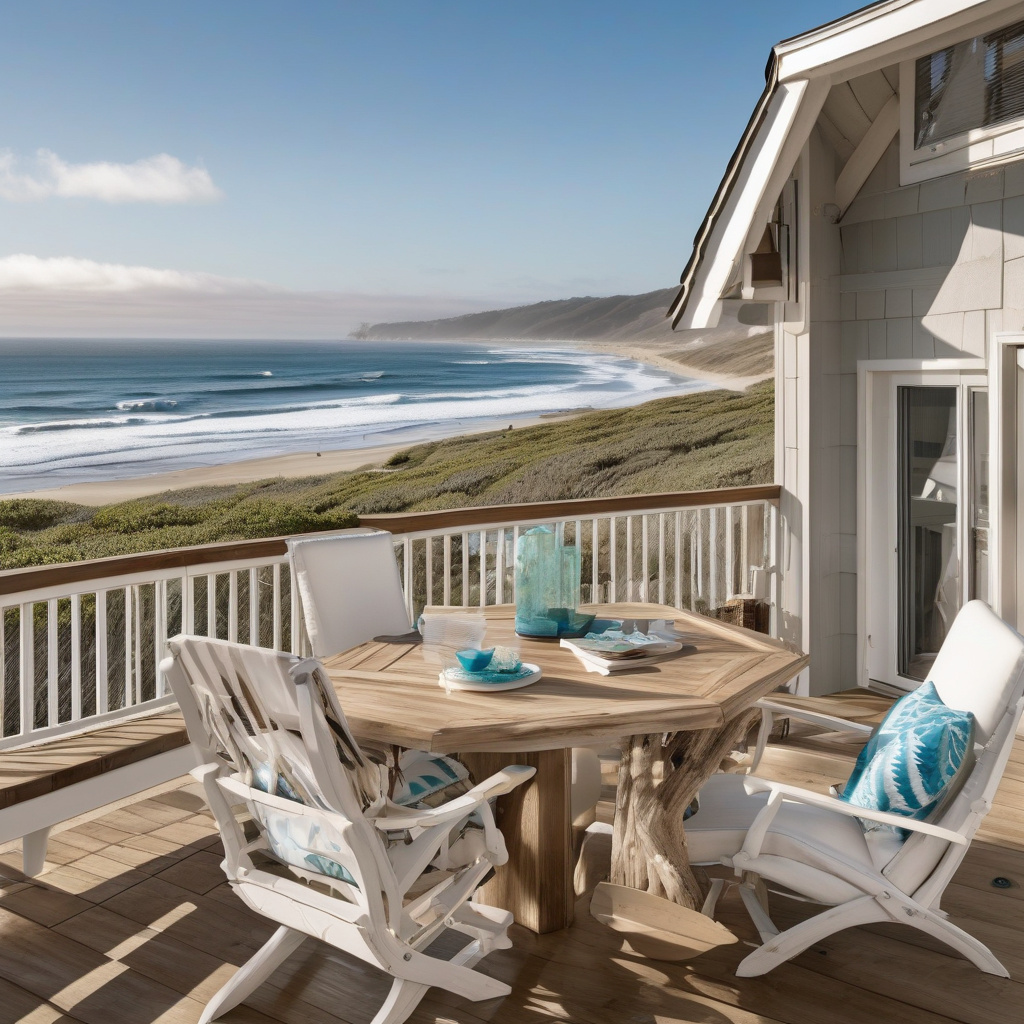
Separate cooking, dining, lounging, and circulation where the deck is large enough. On a compact deck, one flexible furniture group may work better than several undersized zones. Keep paths clear to doors, stairs, gates, hose connections, and emergency access.
Control Surface Heat and Glare
Deck color and material affect how the space feels under direct Southern California sun. Dark boards, dense materials, and areas protected from ocean breeze can become uncomfortable for bare feet. Light finishes may reduce visual heaviness but can reflect glare toward windows and seating areas.
Test board samples at the property rather than relying on showroom conditions. Place them in the proposed deck orientation, expose them to midday sun, and compare surface feel, brightness, texture, and color change. Also evaluate whether furniture shadows, railings, or overhead structures create strong uneven heating.
Shade can come from the building, a permitted cover, an appropriately engineered pergola, or removable products used according to their wind limitations. A large umbrella may be convenient on calm days but unsuitable when left open in coastal wind.
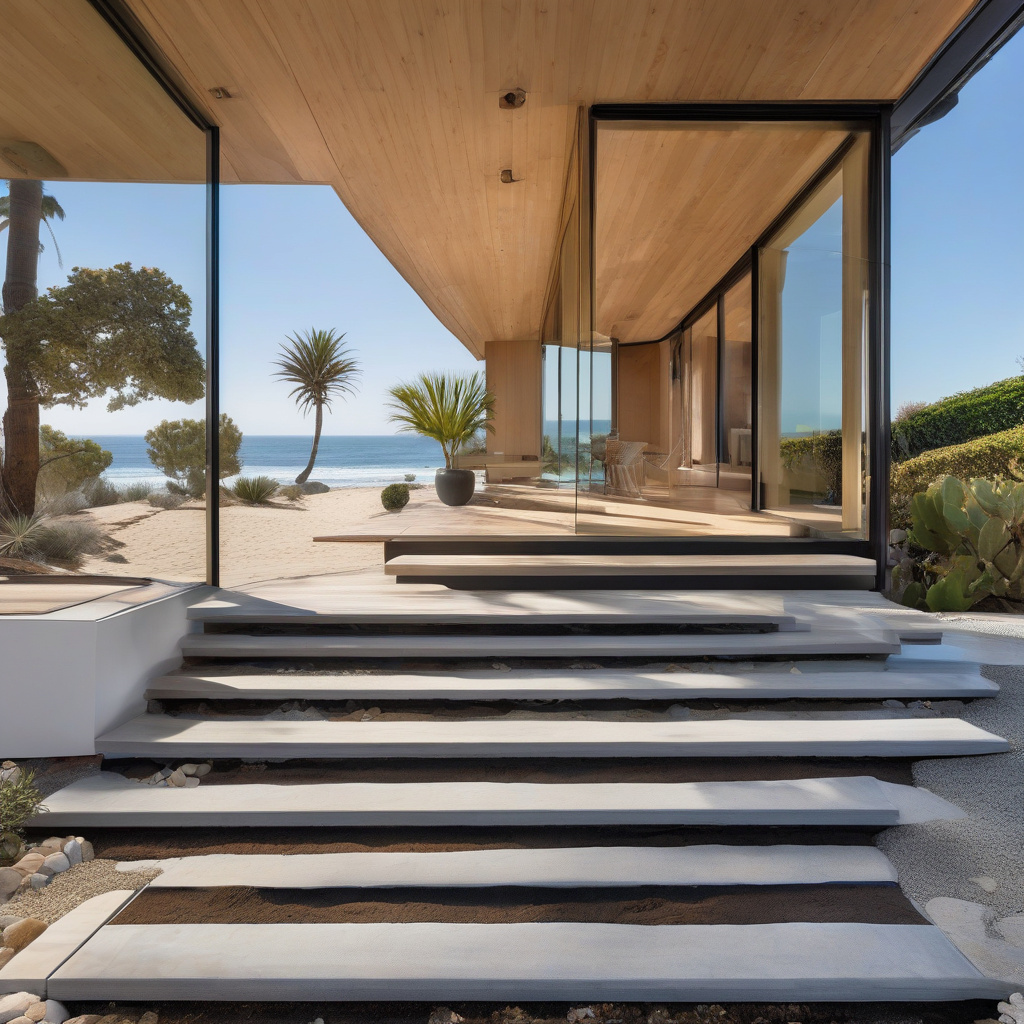
Before selecting the darkest or most reflective surface, compare cooler decking for sunny coastal yards. Product color, composition, texture, airflow, and shade all influence the result.
Use Finishes That Match the Wood and Exposure
Wood finishes should be selected for the species, existing coating, preparation method, sun exposure, and desired appearance. A finish suitable for a vertical fence may not perform the same way on horizontal deck boards exposed to foot traffic, salt deposits, furniture, and standing moisture.
Transparent or lightly pigmented finishes preserve more visible grain but may show weathering and color variation sooner. More opaque products can provide stronger color uniformity while changing the natural appearance and future maintenance process. The correct choice depends on the existing wood and whether the previous coating must be removed.
Salt and dirt should be cleaned using methods compatible with the finish. Applying another coat over a contaminated, damp, peeling, or incompatible surface can produce uneven color and poor adhesion. Let the preparation and product instructions control the sequence.
Review deck stains for intense sun exposure before choosing by sample color alone. The long-term appearance depends on preparation, wood condition, shade, exposure, and maintenance access.
Common Coastal Deck Remodeling Mistakes
The first mistake is replacing boards without inspecting the supporting structure. New decking can hide corroded connectors, damaged joists, loose ledger attachments, or deteriorated stair framing. Surface replacement should follow a documented structural review.
Another mistake is mixing hardware based only on appearance. Decorative black screws, cable fittings, brackets, and railing fasteners may have different corrosion resistance and material compatibility. Hardware should be specified as part of the structural and exterior system.
Homeowners also underestimate wind. Lightweight furniture, planters, heaters, shade sails, and umbrellas can become unstable even when they seem secure in calm weather. Permanent wind screens and covers must be designed for loads rather than attached to existing rails as accessories.
Using indoor furniture or fabrics beneath a partial cover is another common error. Wind-driven moisture, salt film, condensation, and UV exposure can reach areas that appear protected. Products should be rated for the actual outdoor conditions.
Finally, decorative landscaping should not obstruct deck ventilation or inspection. Planters, soil, and dense vegetation kept against framing can hold moisture and conceal connections that need maintenance.
Coastal Deck Remodel Checklist
- Inspect framing, ledger, stairs, railings, posts, and metal connectors.
- Confirm that boards, fasteners, clips, trim, and railings are compatible.
- Test full-size material samples for heat, glare, fading, and cleaning.
- Map wind exposure before placing shade, screens, heaters, or furniture.
- Keep drainage, ventilation, and inspection access open after remodeling.
What Affects the Cost of a Coastal Deck Remodel?
The cost is shaped by structural condition, access, material system, railing scope, corrosion damage, stairs, drainage, permits, and custom detailing. Replacing surface boards on sound framing is a different project from rebuilding posts, beams, ledgers, or ocean-facing railings.
- Condition of framing, connectors, ledger attachments, and stairs
- Deck board category, fastening system, trim, and waste requirements
- Glass, cable, metal, composite, or wood railing configuration
- Restricted access, hillside conditions, material handling, and demolition
- Shade structures, lighting, drainage correction, and built-in seating
Coastal-grade components can raise material costs, but price should be compared through the complete installed assembly rather than one board or fastener. A lower proposal may exclude structural repairs, upgraded connectors, corrosion-compatible hardware, permit work, or restoration of adjacent finishes.
Know When the Deck Needs More Than a Cosmetic Remodel
Stop cosmetic planning when railings move, stairs shift, boards feel soft, posts show decay, metal connectors are heavily corroded, or the deck pulls away from the building. These signs may indicate structural issues that cannot be resolved with new boards or stain.
Elevated decks require particular caution because concealed failures can affect occupants and areas below. A professional may need to assess the ledger, joists, beams, posts, footings, guard connections, waterproofing, and drainage before the remodel scope is finalized.
Permits and engineering may be required when the project changes structural framing, deck area, stairs, guards, roof attachments, or major loads. Requirements depend on the property, existing approvals, deck height, project scope, and reviewing jurisdiction.
A complete remodel should preserve safe access for cleaning and inspection after construction. Components that cannot be reached, rinsed, tightened, or checked are difficult to maintain in a marine environment.
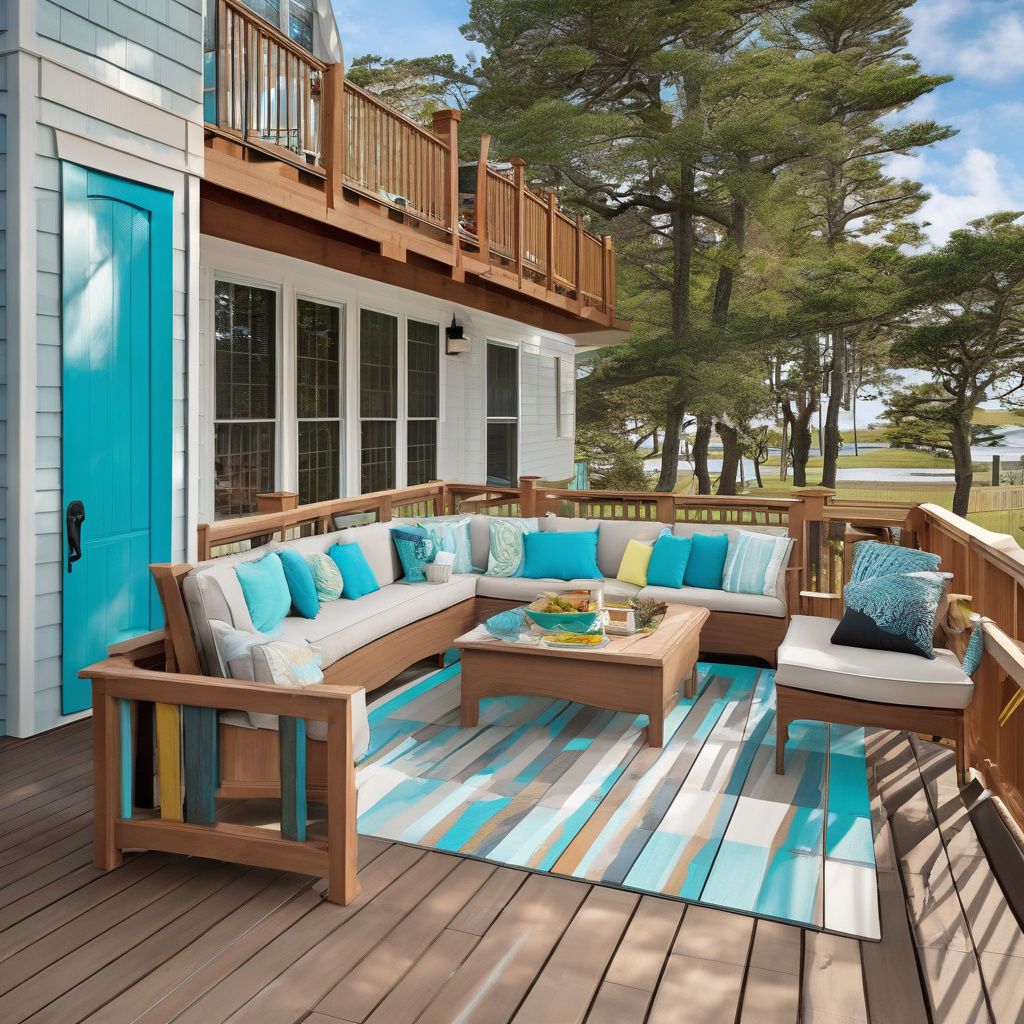
- Coastal decks need compatible corrosion-resistant hardware, UV-stable materials, and wind-aware layouts.
- The main decision is whether the existing framing can support a surface-only remodel.
- Do not choose deck boards without testing heat, glare, fading, and fastening requirements.
- Professional assessment is needed for corrosion, movement, structural repairs, and permit work.
- Start by inspecting the deck from framing and connectors upward.
Frequently Asked Questions
What decking material works best near the ocean?
No single material is best for every coastal property. Natural wood offers authentic appearance and refinishing flexibility but needs regular maintenance. Composite and PVC products reduce some refinishing demands but vary in heat, expansion, texture, color stability, and fastening requirements. The correct choice should follow site exposure, framing, household use, maintenance tolerance, and the manufacturer’s complete installation system.
Does salt air damage deck fasteners and railings?
Salt deposits and moisture can accelerate corrosion of unsuitable or incompatible metal components. Fasteners, brackets, post bases, cable fittings, lighting, furniture hardware, and railing parts should be selected for the expected exposure and surrounding materials. Rust staining may be only a surface sign, while concealed corrosion can reduce connection reliability and should be professionally assessed.
Are composite decks cooler than wood near the beach?
Not universally. Surface temperature varies with product composition, color, texture, direct sun, airflow, and shade. Some dark composite boards may become uncomfortable in strong sun, while certain lighter products may feel more manageable. Natural wood also varies by species and finish. Test full-size samples on the property during peak exposure before selecting a color or material.
What type of railing is best for an ocean-view deck?
Glass and cable systems preserve views, while wood and metal rails may provide more visual enclosure. The correct railing depends on structural design, corrosion exposure, wind, maintenance, cleaning access, and applicable guard requirements. Glass needs regular cleaning in salt air, and cable systems depend on properly engineered posts, fittings, tension, and compatible hardware.
How can I stop outdoor furniture from moving in coastal wind?
Place heavier furniture in sheltered zones, use products designed for outdoor exposure, and store lightweight cushions and accessories when wind is expected. Avoid improvised attachments to railings or structural members. Permanent anchoring, screens, shade structures, and built-ins can affect the deck structure and should use approved connection details rather than casual field fastening.
How often should a coastal wood deck be restained?
Нет достоверного универсального интервала для любого настила. Recoating depends on wood species, finish type, sun, salt exposure, foot traffic, preparation, drainage, and product instructions. Inspect the deck for fading, water absorption, peeling, bare areas, and worn traffic zones. Refinish according to actual coating condition rather than an arbitrary calendar date.
Can I replace deck boards without rebuilding the frame?
Yes, when inspection confirms that the framing, ledger, posts, beams, joists, stairs, and connections remain serviceable and compatible with the new decking system. Surface replacement is not appropriate when corrosion, decay, movement, improper spacing, or structural damage is present. New boards can conceal serious conditions, so the supporting structure should be documented before installation.
Do coastal deck remodels require permits?
Permit requirements depend on the property, existing approvals, deck height, structural scope, railing changes, stairs, size, and jurisdiction. Cosmetic cleaning or limited finish work differs from rebuilding framing, changing guards, expanding the deck, or adding a cover. The applicable Los Angeles authority and qualified project professionals should confirm requirements before structural work begins.