In the world of property extensions, Accessory Dwelling Units (ADUs) are having a moment. Homeowners in Los Angeles and Southern California are increasingly capitalizing on their properties by adding these versatile spaces. However, while ADUs offer significant perks, their addition is no small task, demanding careful consideration of design and insurance implications.
Brief summary: This article explores the critical insurance and design considerations for adding Accessory Dwelling Units (ADUs) to properties, offering insights into budget distribution, design trends, and the importance of adequate insurance coverage to ensure long-term durability and financial protection.
Understanding the ADU Design and Construction Budget
The journey of constructing an ADU is an adventure wrapped in creativity, ambition, and financial forethought. Homeowners often lay initial plans without realizing the tangled web of costs involved. At the forefront of any project is the division of the budget across design, permits, labor, materials, and finishes, each forming its layer of complexity.
Design costs are not to be glossed over. In Los Angeles, engaging talented architects who understand the nuances of ADU layouts can significantly influence the outcome. Expert designers not only make spaces functional but aesthetically pleasing, bringing to life a vision that balances form and durability.
Permits present a unique set of challenges. Here, local regulations and bureaucratic red tape can become costly hindrances. The savvy property owner, therefore, learns early the importance of understanding local planning regulations, particularly those from the Los Angeles city guidelines, ensuring smoother transitions from paper to reality.
Concluding, comprehensive budgeting allows homeowners to pivot effectively amid unforeseen circumstances, ensuring financial preparedness at every stage of construction.
Assessing Insurance Needs for Your New ADU
Insurance is an unsung hero in the realm of home renovations. While many are eager to see walls rise and spaces transform, few put the same enthusiasm into understanding how insurance policy extensions apply to ADUs. Protecting your investment is paramount and requires a strategic approach to coverage.
Consider that an ADU, like any major modification, can significantly impact your existing insurance premium. Additional living spaces mean increased value, risk, and hence, the need for broader or specialized coverage. It is vital to inform your insurer of your construction plans to avoid potential pitfalls.
Moreover, specific policies often need adjustments. For instance, homeowners typically need to assess whether replacement costs are accurately reflected, ensuring any damage is financially covered. Insurance during construction is another crucial area, preventing losses from mishaps or delays.
Industry statistic: “Approximately 60% of property insurance claims are underpaid, often due to inadequate policy adjustments post-renovation.” — California Risk Assessment Journal
Conclusively, navigating insurance not only guards against future financial distress but also provides peace of mind as you welcome family or tenants into your newly expanded home.
Advantages of Rooftop ADUs and Construction Decisions
Rooftop ADUs are climbing in popularity, particularly in cityscapes where land is at a premium. These elevated dwellings not only maximize underutilized roof spaces but offer panoramic views that traditional ground-level ADUs cannot compete with. Design-wise, they present a unique challenge worth considering.
When planning a rooftop addition, meticulous structural assessments are imperative. Engaging with engineering professionals who specialize in rooftop constructions can uncover critical insights into weight distribution and material selection, as detailed in our analysis of pitch-perfect rooftop expansions.
Award-winning Los Angeles builders often opt for lightweight materials that promise durability without sacrificing structural integrity. Moreover, green roofing techniques contribute to significant energy conservation, aligning with California’s forward-thinking approach to eco-friendly construction.
Ultimately, rooftop ADUs offer an innovative solution to space constraints in urban environments, combining functional expansion with aesthetic appeal.
The Financial Implications of Material Choices
The selection of materials is critical in shaping both the cost and longevity of your ADU. Material choices influence everything, from the project’s environmental impact to its financial footprint. Opt for sustainability, and your pockets and planet will thank you.
Many homeowners debate between pricier materials with longer warranties versus cheaper, less durable options. The argument frequently boils down to a question of initial investment against lifetime savings. To make informed decisions, evaluating the differences in primary and conversion designs offers insightful benchmarks.
Expert insight: “Investing in high-quality materials upfront can reduce maintenance costs by 30% over a decade, underscoring the value of durable construction.” — Jane Henderson, L.A. Construction Expert
In conclusion, while cost-effective materials may alleviate budget pressures short-term, investing in quality frequently yields substantial rewards in aesthetics and durability.
Streamlining the ADU Construction Timeline
Time is money, as the saying goes, and any delay can spell financial disaster. Streamlining the construction timeline of an ADU project necessitates precision in coordination and execution. Delays in labor, material delivery, or inspections can escalate costs and frustration.
Thorough planning mitigates these risks. Utilizing project management software that tracks milestones is advisable for maintaining efficiency. Regular communication with contractors ensures alignment on objectives, reducing the likelihood of missteps and reworks.
As many local homeowners notice, the key lies in anticipation—preordering materials and scheduling inspections well in advance, as elucidated through California’s favored methods. Owners should also utilize resources on finalizing ADU inspections smoothly to avoid unnecessary setbacks.
Conclusively, maintaining a realistic yet flexible timeline strengthens the likelihood of successful project completion within budget.
A Step-by-Step Guide to ADU Project Management
- Define the scope of work and project goals.
- Organize a reliable team, including architects, engineers, and project managers.
- Obtain necessary permits from local authorities.
- Schedule inspections at crucial stages to ensure compliance.
- Monitor the project consistently to address issues promptly.
These steps, when structured effectively, secure a smooth transition from concept to completion.
Balancing Design Quality with Budget Constraints
The dance between aspiration and budget defines the ADU construction landscape. Homeowners often find themselves at the crossroads of style and expense, quality, and cost-cutting. However, as history shows, the most successful projects find an elusive balance.
Quality is king in the realm of lasting home value. It’s all too easy to succumb to short-term savings, yet many have learned the hard way that scrimping on essential components can lead to unforeseen repairs. Striking a balance often includes mixing luxury with practicality—splurging on essential features while economizing on less visible elements.
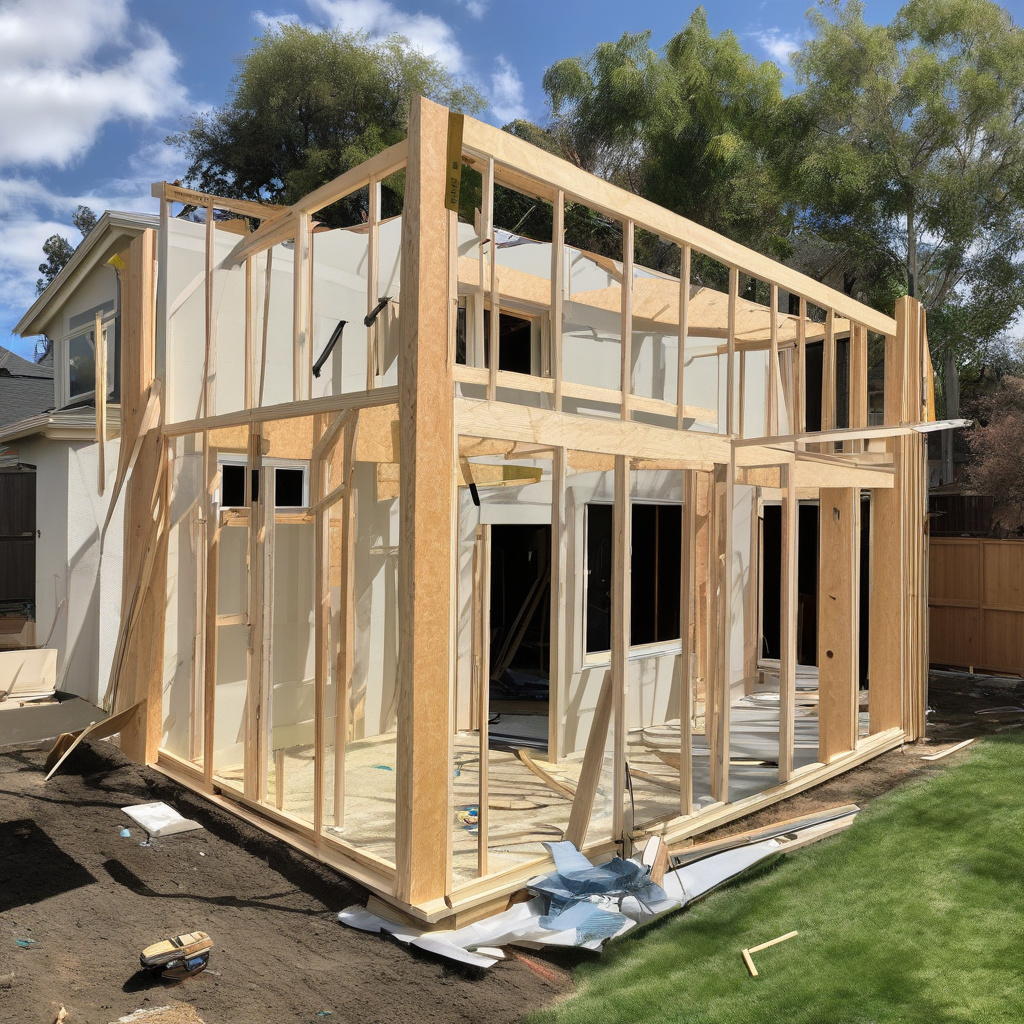
Case studies from across Southern California reveal that projects harmonizing quality with cost yield superior satisfaction rates. These “smart spenders” often enjoy higher property valuations post-completion.
Research-based observation: “Properties with ADUs demonstrate an average ROI increase by 20%, largely attributed to thoughtful design and quality execution.” — Home Value Institute Report
Thus, the equilibrium between dream and reality affords homeowners enduring enjoyment and financial advantage.
Crafting a Future-Ready, Insured ADU
The final steps in ADU construction focus on ensuring your dwelling is not only aesthetically pleasing but also future-ready. Long-term success hinges on embracing sustainable practices and sufficient insurance coverage, safeguarding against risk.
Sustainability initiatives, including energy-efficient installations, position homes as market leaders. Attaining certifications like LEED or ENERGY STAR can elevate property value while mitigating environmental impact.
Moreover, securing a comprehensive insurance policy protects your investment. Engaging with insurance experts proficient in home renovations like ADUs is invaluable, providing tailored coverage that reflects unique property additions.
Ultimately, your ADU is an investment in both the present and future. Embedding sustainability and incorporating resilient design features cultivates lifelong value, both tangible and experiential.

- Budget effectively by understanding cost distribution across necessary construction components.
- Ensure diversified insurance coverage to protect new investments in real estate.
- Evaluate mateial choices thoroughly for their impact on quality, longevity, and insurance premiums.
- Create a streamlined timeline to avoid costly project delays.
- Focus on sustainability to enhance property value and reduce long-term costs.
“`html
FAQ
What is an ADU and why are homeowners considering them?
An ADU, or Accessory Dwelling Unit, is a secondary housing unit on a single-family residential lot. Many homeowners see ADUs as a smart way to increase their property value while providing additional space for family or rental income. In California, where housing issues and high property values are significant, ADUs present an innovative solution. This potential for extra income or space often justifies the considerable upfront investment in permits, design, and construction.
What are the crucial insurance considerations when adding an ADU?
When adding an ADU, homeowners must address several insurance factors to protect their investment. They should notify their current insurer about the project, as it may necessitate coverage adjustments. Liability, both during construction and occupancy, is a key consideration. Failing to update a policy can lead to insufficient coverage, especially if the ADU will be rented out. Homeowners should consult with their insurance provider to ensure the ADU is fully covered, from construction through to finished use.
How does the budgeting process for an ADU break down, and what should homeowners be aware of?
Budgeting for an ADU involves balancing design, permits, labor, materials, and finishes. Homeowners often overlook hidden costs, such as unexpected permitting complications or labor delays. Experts suggest building a 10-20% contingency into the budget to accommodate these uncertainties. It’s also crucial to prioritize quality materials and workmanship, as these impact the long-term durability and value of the ADU. In real projects, cutting costs in these areas can lead to expensive repairs later on.
What are the primary benefits and drawbacks of adding an ADU to older properties?
Adding an ADU to an older property can enhance its functionality and value. However, integrating new systems with old infrastructures presents challenges. Benefits include modernizing your property’s utility systems and maximizing space use, whereas challenges often involve extensive renovations to comply with current codes. Balancing the charm of the existing architecture with new construction can also be tricky but rewarding when managed carefully.
Are there specific mistakes to avoid during ADU construction?
A common mistake during ADU construction is neglecting proper permitting, leading to fines or project delays. Another is underestimating costs associated with integrating utility systems and adhering to zoning requirements. Cutting corners on inspections or using inferior materials may save money initially but usually results in higher maintenance expenses. Engaging with experienced ADU specialists can mitigate these risks, ensuring the project meets both personal and legal standards.
How do design choices shape the quality and durability of an ADU?
Design choices are fundamental in ensuring an ADU’s long-term quality and durability. Selecting resilient, sustainable materials that can withstand environmental elements is crucial. Many experts stress the importance of good ventilation, insulation, and water management systems to prevent mold and decay. Homeowners are encouraged to engage with architects who understand these specific demands, particularly in regions like California, to make informed decisions that balance aesthetics and functionality.
When does it make financial sense to add an ADU?
Adding an ADU is financially sensible when the potential rental income justifies the building costs, or when the unit fulfills long-term family housing needs. Market conditions, particularly in urban areas with housing shortages like parts of California, often favor ADU investments. If the property is located in a popular or appreciating neighborhood, the addition could significantly boost overall property value. Homeowners considering this path should evaluate local rental markets meticulously and consult local ADU specialists for a tailored financial assessment.
What are the maintenance requirements for an ADU?
Maintenance for an ADU involves regular inspections and upkeep of roofing, plumbing, and electrical systems. Given their size, these units may seem low-maintenance, but neglecting small repairs can lead to larger issues later. Seasonal checks for water intrusion, HVAC performance, and structural integrity are recommended. In addition, if renting the unit, landlords are responsible for tenant-ready conditions, meaning any needed repairs must be addressed swiftly to maintain livability and compliance with rental regulations.
“`